Matka
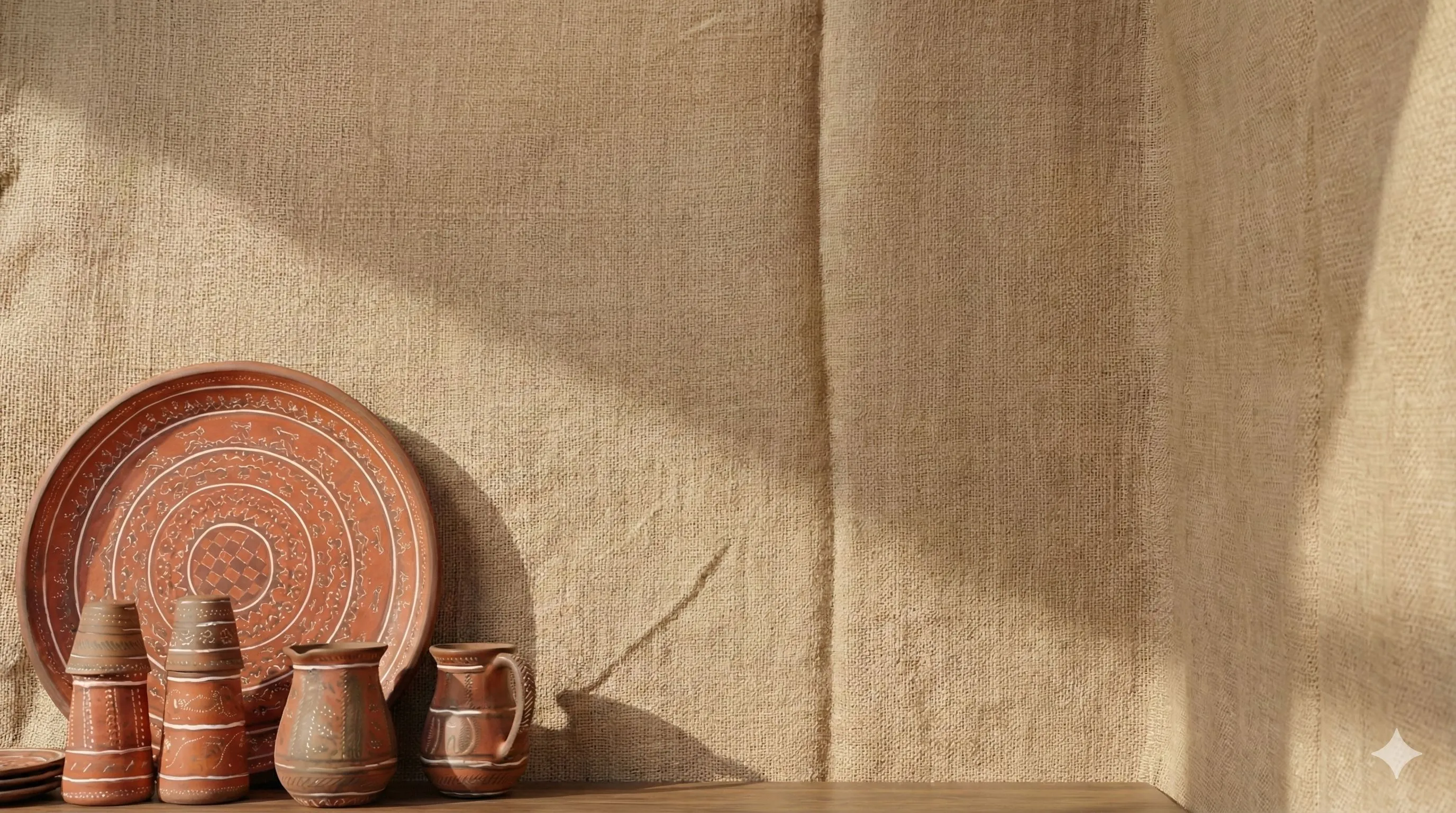
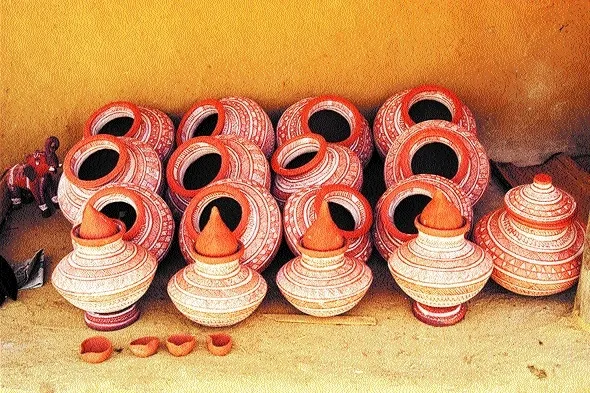
Water pots that keep their contents naturally cool through the desert heat.
Local clay, a kicked stone wheel and a dung-fired kiln — the oldest craft in Kutch, turning earth into water pots, lamps and towering terracotta horses.
Pottery is the oldest living craft in Kutch — its lineage runs all the way back to the Harappan cities that stood here more than four thousand years ago.
The Kumbhar (potter) community has refined the art of turning local clay into everything a household needs and a temple desires: cooling water pots, oil lamps, storage jars and the magnificent six-foot terracotta horses offered at shrines. Every piece is thrown on a traditional kick wheel and shaped by hand alone — no moulds, no machines.
A terracotta matka keeps water ten to fifteen degrees cooler than the air around it — engineering, made of mud.
The whole craft turns on rhythm — of the wheel, the hand and the slow heat of the kiln.
Seated cross-legged, the potter kicks a heavy stone disc into a spin and keeps it turning by feel — an ancient technique that demands perfect rhythm and balance.
Local clay is tempered with rice husk or sand so it won't crack, then drawn up entirely by hand — no moulds are ever used.
Open-air kilns fuelled by cow-dung cakes burn for twelve to twenty-four hours, reaching 800–1000°C to harden the clay into terracotta.
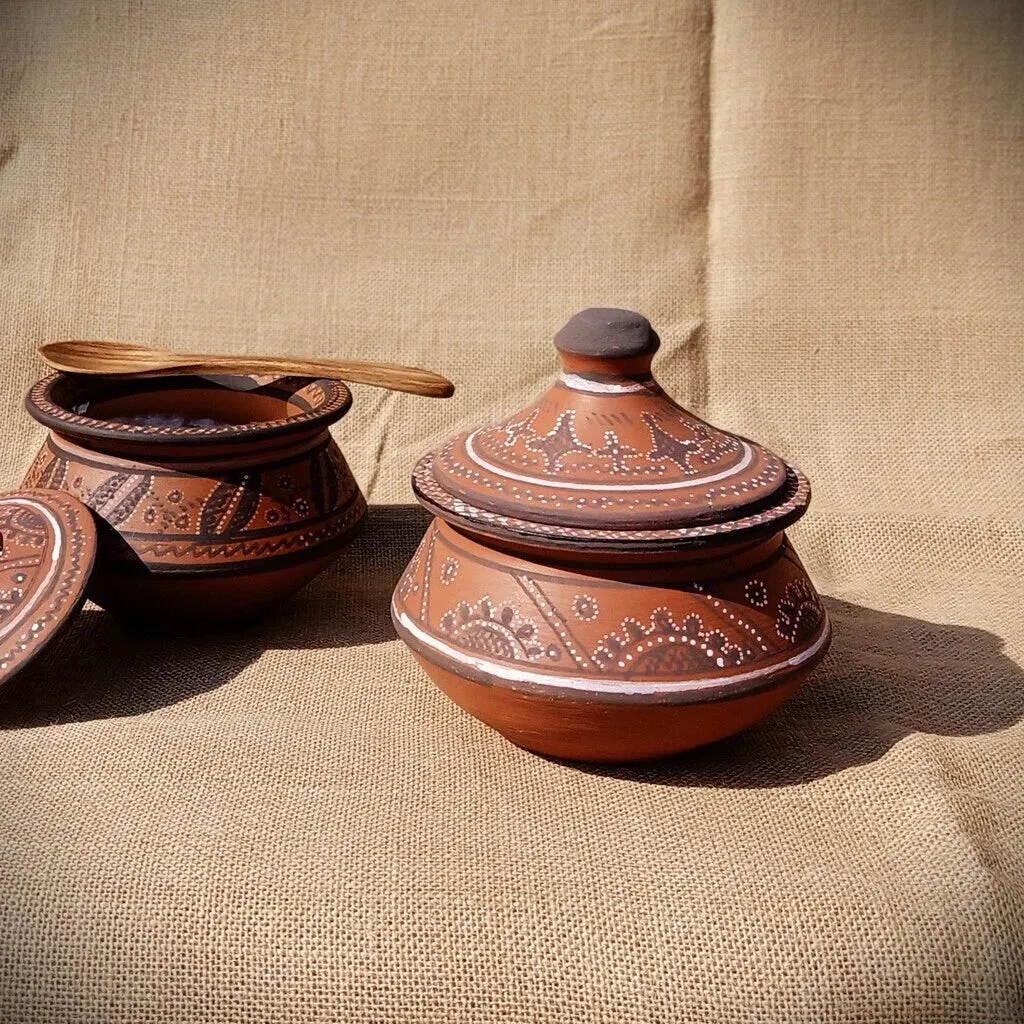
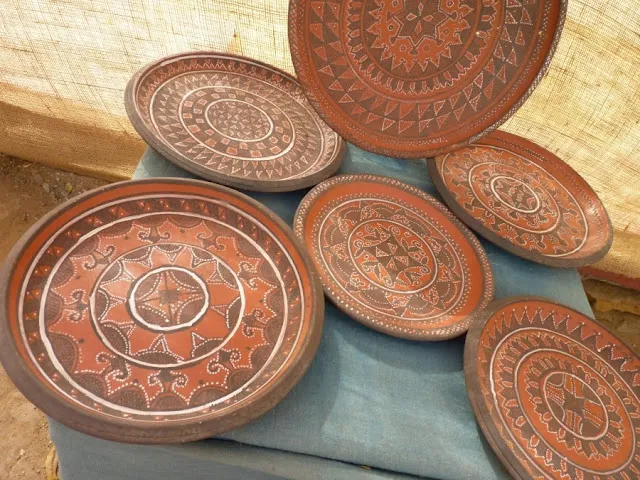
Hand-painting with natural pigments, incised lines, slip work and even embedded mirrors give each fired piece its final character.
From the most everyday vessel to sculpture made for the gods.
Water pots that keep their contents naturally cool through the desert heat.
Towering votive sculptures offered at temples and shrines.
Cooking pots, serving dishes and storage jars for daily life.
Earthen oil lamps, essential to festivals and rituals.
Birds, animals and human forms in painted terracotta.
The villages north of Bhuj are where the wheels still turn.
The best-known centre for traditional Kutch pottery and painting.
Renowned for its finely painted terracotta work.
A wide spread of pottery from across the region in one place.
Watch potters throw on the traditional wheel and fire their kilns.
| Piece | Typical Range |
|---|---|
| Diyas & small cups | ₹50 – ₹200 |
| Water pots (matka) | ₹300 – ₹800 |
| Painted vessels | ₹1,500 – ₹5,000 |
| Terracotta horses | ₹3,000 – ₹20,000+ |
Prices rise with size, painting and the intricacy of the form.
Watch local clay rise into a pot under a potter's hands in Khavda, then choose a piece fired in a dung kiln to carry home.